


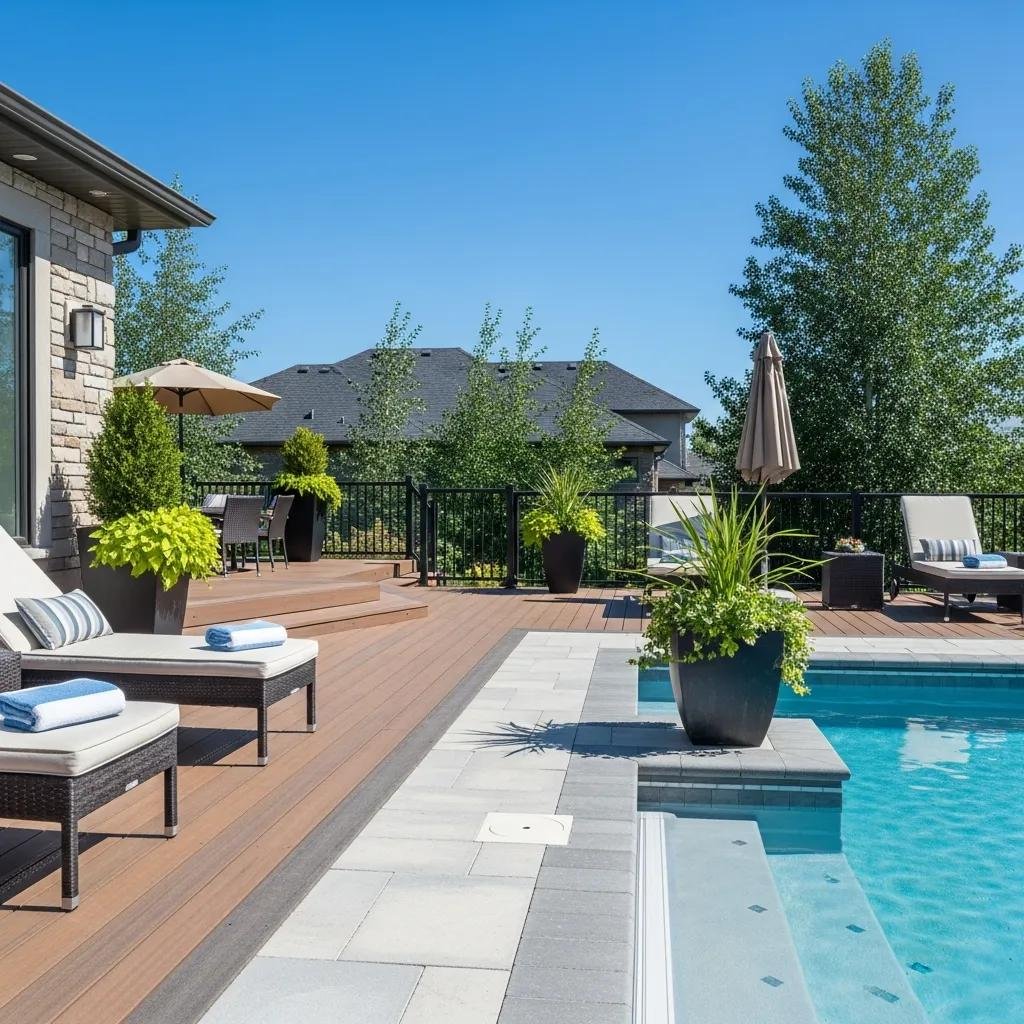

Best Pool Deck Material Options for Calgary Homeowners
Choosing the right pool deck material is important for Calgary homeowners because local freeze–thaw cycles and temperature swings demand durable, low-maintenance surfaces. This guide summarizes durable options, safety and slip-resistance considerations, design ideas, and resurfacing alternatives to help match performance to budget and style.
What Are the Most Durable Pool Deck Materials Suitable for Calgary's Climate?
In Calgary, durability against moisture and thermal movement is essential. Common options are composite and PVC decking, concrete, and natural stone — each balances resistance to freezing cycles, maintenance needs, and longevity.
Composite and PVC resist moisture and biological decay, making them practical around pools. Concrete provides structural strength but needs proper installation and sealing to limit cracking; natural stone resists freeze–thaw but usually benefits from periodic sealing.
How Does Concrete Perform as a Pool Deck Material in Calgary?
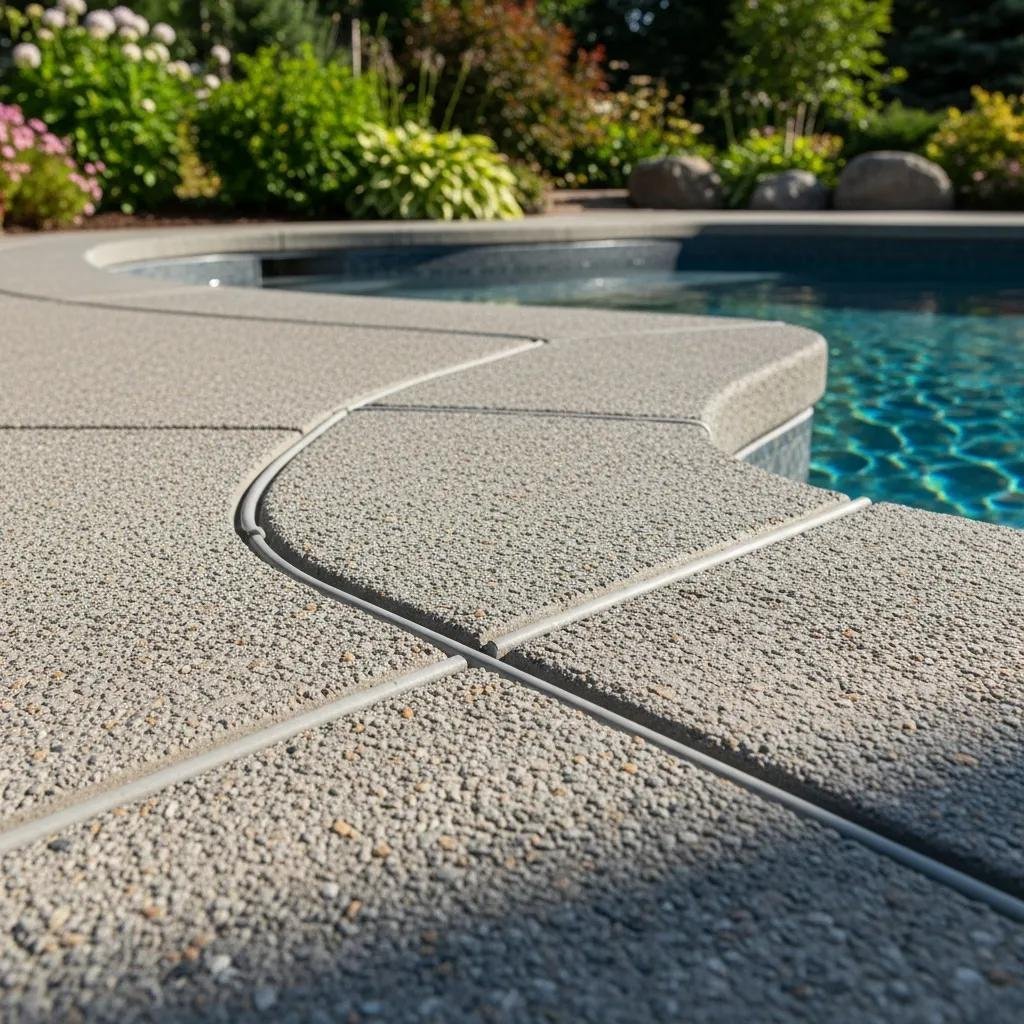
With correct base preparation, control joints, and routine sealing, concrete tolerates Calgary’s conditions and offers many finish options. Poor installation or neglected maintenance increases cracking risk, so periodic cleaning and resealing are important to preserve appearance and service life.
What Are the Benefits of Composite Decking for Pool Areas?
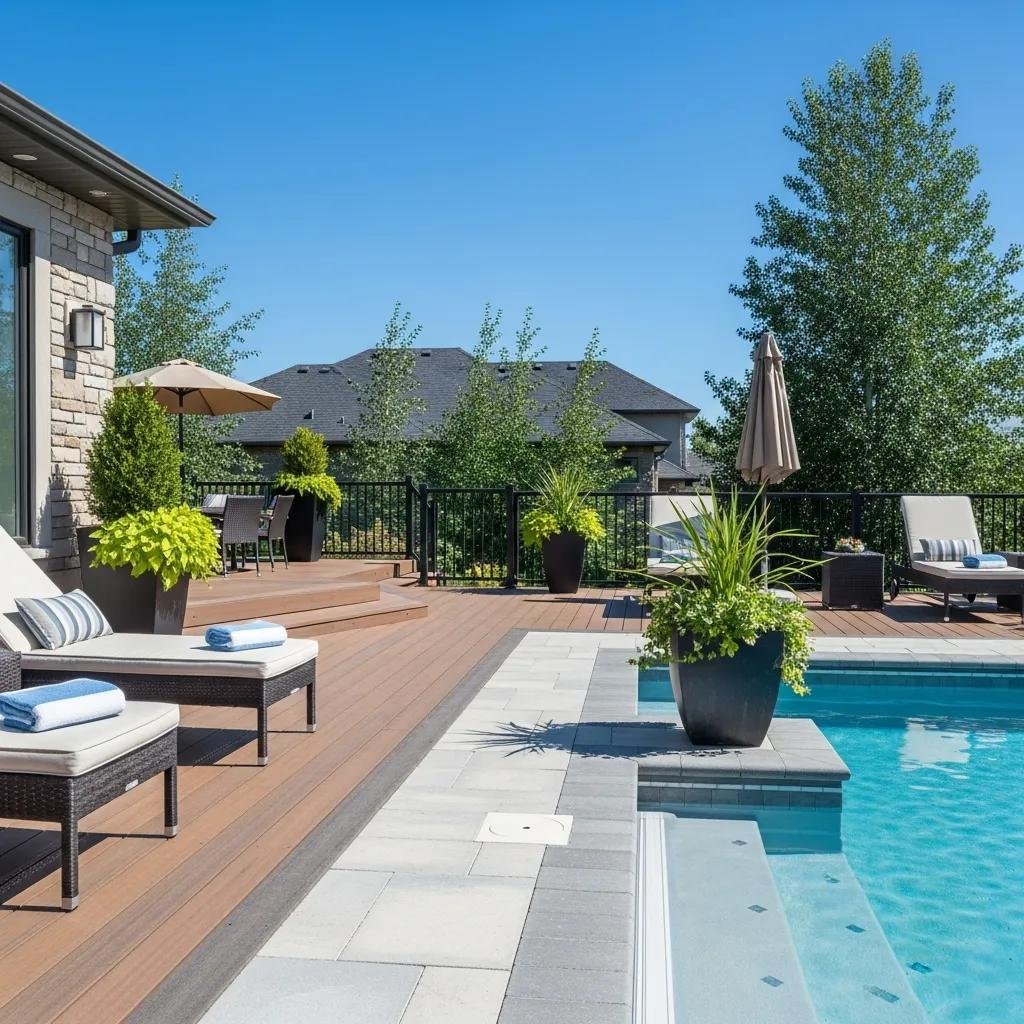
Composite decking is durable and low-maintenance, resists moisture absorption, and reduces mould and mildew risk around pools. Many products contain recycled content, which can appeal to homeowners seeking sustainable materials.
Which Pool Deck Materials Offer Optimal Safety and Slip Resistance?
Safety and consistent slip resistance when wet should guide material and finish selection to reduce accidents.
- Stone
: Textured natural stone (slate, flagstone) provides good traction and an upscale look. - Tile
: Choose outdoor tiles with slip-resistant finishes designed for wet areas. - Wood
: Proper cleaning, sealing, and textured treatments improve wood’s traction.
How Do Stone and Tile Materials Enhance Pool Deck Safety?
Surface texture and anti-slip finishes are the main safety features of stone and outdoor tiles; both can provide reliable traction when properly selected and installed.
What Maintenance Practices Improve Slip Resistance on Wood Decks?
Keep wood decks safe by combining routine cleaning, protective sealants, and surface treatments that add texture or grip.
- Regular Cleaning
: Remove debris, algae, and mold promptly to prevent slick surfaces. - Sealing
: A quality sealant reduces moisture uptake and can improve grip. - Slip-Resistant Coatings
: Specialized coatings or textured finishes increase traction reliably.
Ongoing research into non-slip coatings—including performance under freeze–thaw cycles—continues to inform best practices for outdoor installations.
Non-Slip Deck Coatings for Freeze-Thaw Performance
In the future, further studies on the production process of non-slip used for wooden decks and additional studies such as freezing and melting performance depending on the location installed inside and outside will be needed.
Performance Improvement of Ceramic Coating Agent for Deck Non-slip, SH Yun, 2021
How Can Calgary Homeowners Choose the Best Pool Deck Design and Material Combination?
Match material performance to intended use, budget, and desired appearance. Consider maintenance tolerance and how the deck integrates with landscaping and architecture.
What Are Popular Pool Deck Design Ideas in Calgary?
Calgary homeowners often combine practical features with refined finishes. Common elements include:
- Integrated LED Lighting
: Improves safety and evening ambiance. - Built-in Seating
: Adds comfort and defined lounging areas. - Storage Solutions
: Hidden storage keeps pool gear tidy and accessible.
How Do Material Costs Influence Pool Deck Design Decisions?
Higher upfront costs (natural stone, high-end composite) can be offset by lower maintenance and longer life. Balance initial budget with lifecycle performance to select the best value for your priorities.
What Are Effective Pool Deck Resurfacing Options for Extending Deck Longevity?
Resurfacing can refresh appearance and improve safety without full replacement when the structure beneath is sound.
- Concrete Resurfacing
: Repair and enhance existing concrete affordably. - Overlay Systems
: Create a new finish and better slip resistance. - Staining
: Adds color and surface protection.
When Is Pool Deck Resurfacing Recommended Over Replacement?
Resurfacing is appropriate for surface wear, minor cracking, or fading when the deck’s structure remains stable. If deeper structural damage exists, replacement may be required.
Even newer resurfacing systems can fail; specify quality materials and experienced applicators to reduce risk.
Pool Deck Coating Failure & Resurfacing Challenges
overlay surrounding a pool and a hot tub. Although the hotel and pool deck were only seven years old, the second cementitious coating on the pool deck was already failing —
Backstrokes, Cannonballs, & Cracks: The Problem-Plagued Pool Deck, 2006
Which Materials Are Best for Pool Deck Resurfacing in Calgary?
- Concrete Overlays
: Restore and refresh existing concrete surfaces effectively. - Epoxy Coatings
: Durable and slip-resistant, but use cautiously where freeze–thaw is a concern. - Stained Concrete
: Adds durable color while protecting the surface.
Understand each option’s performance to choose a resurfacing method that matches local conditions. For professional guidance on selection and installation, consider consulting with
Serenity Construction Ltd.
, who specialize in deck and home renovation services.
Considering a new pool deck?
Deck builders
like Serenity Construction Ltd. can help design and build a durable, code-compliant outdoor space.
To review additional options, contact local
deck builders
in Calgary for tailored advice and installation.
Frequently Asked Questions
What factors should I consider when choosing pool deck materials for Calgary?
Prioritise climate resilience, slip resistance, maintenance needs, and how the material complements your home and landscape. Choose finishes that reduce water ingress and tolerate freeze–thaw cycles.
Are there eco-friendly options for pool deck materials?
Yes. Recycled-content composite decking and long-lived natural stone can reduce environmental impact. Permeable paving is another option to limit runoff; verify manufacturer sustainability claims.
How can I improve the longevity of my pool deck?
Regular cleaning and timely maintenance extend service life: seal concrete as recommended, protect wood with sealants, and address surface wear promptly with resurfacing if needed.
What are the best practices for winterizing a pool deck in Calgary?
Remove debris, store furniture, and reapply sealants before winter. Use non-damaging snow removal tools and clear snow regularly to limit prolonged moisture exposure.
What are the costs associated with different pool deck materials?
Costs vary by material and finish. Concrete is generally most economical, composite and PVC range higher, and natural stone often has the highest upfront cost; include long-term maintenance in budgets.
How do I choose the right color and finish for my pool deck?
Select colors and textures that balance appearance and performance: lighter tones reduce heat gain; textured finishes improve slip resistance. Review samples in natural light before deciding.
Conclusion
Selecting the right pool deck material for Calgary means balancing durability, safety, maintenance, and style. Understanding the strengths of composite decking, natural stone, concrete, and resurfacing options will help you make an informed choice; consult experienced contractors for project-specific recommendations.
Comments